A security guard new hire kit should cover six things before the first shift: a uniform with proper security identification, outerwear for the season, a duty belt with the basics, a memo book, a flashlight, and footwear that can handle a full shift on concrete or in slush. For security companies, standardizing that kit means every new guard arrives looking the same and carrying the same essentials. It also means ordering from one list instead of rebuilding it for every hire.
Here's what goes in the kit, why each item earns its place, and how agencies keep it consistent across a growing team.
The Day-One Checklist at a Glance
- Uniform: 2–3 uniform shirts, 2 pairs of duty pants, security patches and epaulettes, a cap or toque
- Outerwear: a duty jacket, gloves, and hi-vis for outdoor or traffic posts
- Duty belt: inner and outer belt, keepers, and pouches for what the post requires
- Memo book: a weather-resistant evidence notebook and a cover
- Flashlight: a rechargeable duty light, plus a holder
- Footwear: duty boots built for 8–12 hours on your feet
What Goes in Each Part of the Kit
1. Uniform: Shirts, Pants and Identification
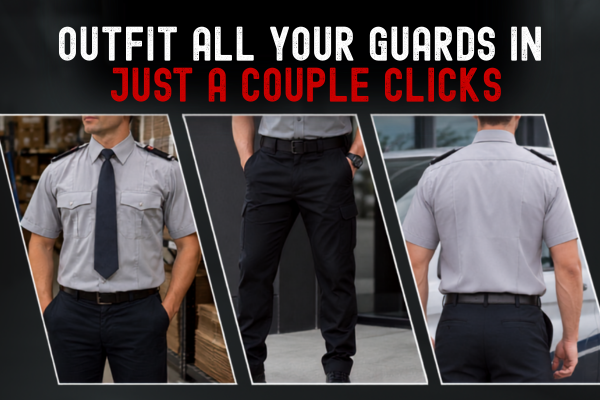
Start with uniform shirts and duty pants. Two to three shirts is the practical minimum, back-to-back 12-hour shifts don't leave time for laundry every night. For a growing team, a set rotation means fewer "my only shirt is in the wash" call-ins.
Add security patches and epaulettes so the guard is clearly identified as security, and a cap or toque from our hats collection. Rules on what a uniform must display vary by province, and guards working in Quebec or at bilingual sites may need French "Sécurité" identification. Our guide to security guard uniform requirements in Canada covers the details.
Agencies can add their own logo with custom printing, custom stitching, or custom patches. Logo cresting on shirts is one of the most common requests we get from agencies.
2. Outerwear for the Season
A guard hired in the fall needs winter gear before December, not after the first cold snap. In the GTA, that means a duty jacket that handles wind off the lake, gloves that still let you write in a memo book, and hi-vis apparel for parking lots, construction sites, and traffic posts.
Browse outerwear, and see our winter security gear guide for layering. For managers, budgeting outerwear into the onboarding cost avoids a second scramble every November.
3. Duty Belt and the Basics
A duty belt holds everything a guard needs to reach without looking. The standard setup is an inner belt, an outer duty belt, and belt keepers to lock the two together so nothing shifts during a patrol. From there, add pouches only for what the post calls for: a flashlight holder, a key holder, a glove pouch, and a handcuff case where the role requires one.
Find belts and pouches in duty belts and accessories. Issuing every new hire the same belt layout makes training simpler and lets supervisors spot a missing item at a glance.
4. Memo Book
Notes taken during a shift can end up in an incident report or in court, so a proper memo book matters. The Triform Evidence Memo Book and the Guardian Duty Memo Note Book are our two most-ordered options. A cover keeps pages dry in rain and slush. Browse the full memo and evidence books range.
5. Flashlight
Night shifts, stairwells, parking garages, and power outages all call for a dedicated light, not a phone. A rechargeable duty flashlight saves on batteries over a year of shifts, and a belt holder keeps it in the same spot every time. See all flashlights and accessories.
6. Footwear
Guards can spend most of a 12-hour shift standing or walking on concrete. Look for a supportive duty boot with slip-resistant soles, and waterproofing for outdoor posts through Toronto winter. Some sites require CSA-approved safety footwear, so check the post before buying. Shop tactical and duty footwear.
Role-Dependent Gear: Add Only If the Post Requires It
Not every guard needs the same gear beyond the basics. These items depend on the site, the contract, and employer policy:
- Handcuffs and batons: legal in Canada, but whether a guard carries them is set by the employer and depends on proper training. Our courses include online use of force training.
- Dog and coyote spray: for patrols in parks, ravines, or industrial lots where animals are a known issue.
- Body armour: based on the site's risk assessment, not a day-one default. Our plate carrier vs. full vest guide explains the options.
- Duty bag: useful for guards who move between sites or on mobile patrol.
Why Security Companies Standardize New Hire Kits
When every new guard gets the same kit, the benefits show up across the whole operation:
- Consistent appearance: clients see the same uniform and identification at every post.
- Faster onboarding: one order per hire instead of a dozen separate items.
- Predictable budgets: a fixed per-hire cost makes forecasting easier as the team grows.
- Easier reorders: replacing a worn shirt or a lost memo book means reordering a known item.
Our B2B Portal is built for this: approved items, account pricing, and repeat ordering in one place. For larger rollouts, see how bulk security uniform ordering through the portal works.
Uniform and equipment rules vary by province and by employer. Confirm current requirements with your employer or your provincial licensing authority before your first shift.
Frequently Asked Questions
What gear does a new security guard need on day one?
At minimum: uniform shirts and pants with security identification, seasonal outerwear, a duty belt, a memo book, a flashlight, and duty footwear. Items like handcuffs, batons, or body armour depend on the post and employer policy.
How many uniform shirts should a new guard have?
Two to three. That covers back-to-back shifts and laundry without a guard showing up in a wrinkled or damp shirt. Guards on 12-hour rotations often prefer three.
Do security guards buy their own uniform in Canada?
It depends on the employer. Many agencies issue the core uniform and identification, while guards buy personal items like boots, gloves, or a preferred flashlight. Check your employer's uniform policy before buying.
Can a security company order standardized kits for every new hire?
Yes. Agencies can set up a corporate account through our B2B Portal, add their logo with custom printing or patches, and reorder the same kit for each new hire.
Starting a new security job? Shop our New Hire Kits, in-stock orders placed by 2pm ship the same day.
Outfitting a team? Sign up for the B2B Portal to standardize kits and pricing for every new hire.